Registration & Refreshments

Balancing Commercial Returns with Operational Reality - Energy Trading & Revenues
- How do Australian operators decide when to prioritise battery degradation management versus capturing high-value FCAS and energy arbitrage opportunities, particularly during extreme pricing events that can reach $16,600/MWh?
- What does absorbing merchant risk mean for Australian BESS operators in a market with volatile renewable penetration, and how do you manage exposure to negative pricing events while maintaining 24-hour availability commitments?
- How do operators communicate real-time asset health constraints and cycling limitations to trading desks without compromising revenue opportunities in Australia's fast-moving ancillary services markets?
- What operational indicators do Australian BESS operators rely on to detect performance degradation before it impacts FCAS compliance or energy market participation, and where do current monitoring systems fall short?
- Why do revenue forecasts often miss the mark in Australia's evolving energy landscape, and what operational realities around battery performance, grid constraints, and market rule changes are causing the biggest gaps between financial models and actual returns?
Speakers
-
 Tim Edmonds, Head of Advisory, Simply Energy NZ
-
 Dr. Mahdi Behrangrad, Head of ESS/VPP Business Department , Pacifico Energy K.K.
-
 Kashish Shah, Senior Strategy Lead, Wärtsilä Energy Storage
-
 Thomas Schmitz, General Manager, Energy Markets, Member of Advisory Board, AbsoluteClimo, Aquila Clean Energy APAC
-
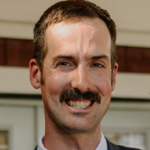 Matt Grover, Director, Energy Markets, Fluence
What Australia’s Operating Battery Fleet Tells Us About What Comes Next
- As Australia’s operational battery fleet rapidly expands, what does the market look like today? Where are we seeing the biggest shifts in project scale, ownership, contracting structures, revenue strategies and operating models, and what does this tell us about the maturity of the sector?
- What is the operating fleet revealing that development and financial models couldn’t? From performance and availability to warranties, service agreements, maintenance and revenue expectations, how is real-world experience changing assumptions around what makes a commercially successful battery project?
- Looking across the lessons emerging from Australia’s operating assets, what comes next for the market? How should developers, investors, lenders and asset owners be adapting project design, procurement, financing and operational strategies as the fleet grows and the market becomes increasingly competitive?




Morning Networking Break
Managing More GWh with Less Effort: Better Signals, Faster Diagnosis, and AI-Guided Actions
As BESS fleets grow, asset teams are being asked to manage far more complexity without adding people at the same rate. Shyam Srinivasan, EVP, BESS Software at Elysia Battery Intelligence (A Fortescue Zero Company), will share field examples of the issues that make battery performance so difficult to manage, including hidden availability losses, sudden power setpoint deviations, inaccurate SoC and power signals, and block imbalance that quietly strands usable capacity.
The session will show how Elysia BESS Copilot combines cloud diagnostics with real-time on-premise intelligence to identify root causes faster, improve the signals operators rely on, and guide corrective action, helping asset managers recover performance and manage more GWh with the teams they already have.

Sponsor

Banking BESS: Pricing in Investment Risk with Confidence, not Guesswork

Sponsor

Superior Event Value Capture: How Stochastic Optimisation Outperformed Australia's Leading Storage Assets

Sponsor

Networking Lunch

Proving Grid-Forming Inverters for System Strength
- How does the 38% cost increase in synchronous condenser delivery change the economic case for grid-forming battery storage in Australia?
- How do grid-forming inverters need to perform to meet minimum system strength requirements, not just the efficiency level?
- Who decides whether grid-forming BESS is technically credible enough to replace synchronous machines, and what evidence are they looking for?
- How does grid-forming capability inform the design and operation of hybrid and collocated sites, including large loads such as data centres and long-duration storage?
- How are early grid-forming projects informing commissioning and operational practice for the assets coming next?
- Who bears the cost and risk if grid-forming batteries can't be validated in time to offset delayed condenser delivery?
Speakers
-
 Dr Georgios Konstantinou, Associate Professor in Energy Systems with the School of Electrical Engineering and Telecommunications, UNSW
-
 Ravi Kumar, Grid Director, Australia, Fluence
-
 Rob Mailler, Technical Lead, Tumuruu, Principal Consultant, Kinelli Pty Ltd
-
 Dr Adam Surmiak, Head of Grid, Australia, EDP Renewables
Afternoon Networking Break
Warranties, Insurance and Contracting: Building Resilient BESS Portfolios 101
- How do warranties interact with battery performance and operation, and what does good practice look like?
- What opportunities exist to standardise warranty processes for smoother, more predictable asset operation?
- How are OEM warranty frameworks shaping best-practice asset management?
- Why does insurance matter for BESS assets, and what coverage options and innovations are emerging in the market?
- As an asset manager, what does strong contract execution and stakeholder alignment look like across all parties?
Moderator





Mitigating the Worst-Case Scenario: How are Developers Navigating Safety Measures?
- How can risks be mitigated, and what is the vital consideration with your battery?
- How can you look after your battery once it’s been installed?
- How should you consider site security and site protection?
- How are safe systems of work being implemented to ensure those on the ground are protected from risks?
- How are developers navigating stringent safety measures?
Moderator





Networking Drinks
Registration & Refreshments
Opening Remarks from Solar Media
Welcome from the Chair

From Development to Decommissioning: Design, Operations, End-of-Life
- What does managing a battery asset for 15+ years actually mean in Australia's evolving regulatory environment, and what critical knowledge gaps still exist around long-term degradation patterns, cycling impacts, and performance optimisation in our climate conditions?
- How do Australian asset owners reconcile the developer-operator mindset shift, where the skills and incentives that drove rapid BESS deployment don't align with the operational discipline needed for sustained NEM participation and AEMO compliance over decades?
- What proactive lifecycle strategies should Australian BESS owners implement from day one to factor in future decommissioning costs, second-life applications, and potential retrofitting opportunities while maintaining current revenue streams and availability guarantees?
- How are emerging demand drivers like recycling, data centres and hyperscale deployments reshaping Australia's BESS procurement and operational strategies, and what does rapid deployment at scale mean for long-term asset management practices?
- What cycling strategies and state-of-charge management protocols are Australian operators implementing to balance immediate FCAS and energy market participation against preserving asset health for 15+ year operational horizons, and where do current approaches fall short?

Hybrid Solar-Plus-Storage in Australia: Navigating Design, Operations, and Economic Optimisation
- AC-coupled versus DC-coupled architectures: What are the trade-offs for Australian hybrid projects when considering interconnection costs?
- How can Australian developers design battery systems with co-location in mind from the outset to streamline commissioning processes, optimise shared infrastructure costs, and unlock additional economic incentives?
- What are the practical challenges of managing different design lives when pairing 25-year solar assets with 15-year battery systems?
- How do Australian hybrid plants deliver the predictable performance and fast responsiveness that AEMO expects while coordinating reactive power management, ramp-rate control, and advanced grid services across multiple generation and storage technologies behind a single connection point?
- What role will Long Duration Energy Storage (LDES) play in Australia's hybrid project pipeline, and how are developers evaluating LDES technologies against traditional lithium-ion systems?

Speakers
-
 Alistair Gibson, Senior Key Account Executive - Utility (BESS, Hybrid, PV), Sungrow Australia
-
 Evonne Bennett, Chief Operating Officer, Aula Energy
-
 Simon Franklin, Country Director, EDP Renewables Australia
-
 Toby Roberts, Country Director - Australia, Elements Green
-
 Jack Han, Strategic Market Expansion and Transactions, Tesla
Morning Networking Break



Attracting Overseas Investment for Australian BESS
- What revenue architecture are international investors actually underwriting?
- Are foreign capital sources prioritising contracted PPA structures over merchant arbitrage opportunities?
- How do different investor types (pension funds vs infrastructure funds vs trading houses) evaluate BESS revenue diversity across frequency regulation, energy arbitrage, and capacity markets?
- Can structured capacity arrangements provide the revenue certainty that allows international investors to deploy larger ticket sizes into Australian BESS, and what operational flexibility do asset owners sacrifice in these structures?
- How are international lenders and equity investors pricing the volatility of Australian spot market arbitrage, and what hedging or revenue floor mechanisms make merchant BESS assets investable for risk-averse foreign capital?
- What liquidity mechanisms and portfolio aggregation strategies allow foreign investors to scale their Australian BESS exposure while maintaining the operational control needed for optimal dispatch and revenue maximisation?
- Can geopolitical flight capital accelerate revenue growth?




Networking Lunch
Operating Batteries in Australia’s Harsh and Vast Climates
- How do thermal management systems balance performance optimisation with noise suppression requirements in extreme Australian climates?
- How are emerging battery chemistries, such as sodium-ion, changing the design and operational requirements for Australian installations?
- What role does site selection and civil design play in managing environmental risks across Australia's diverse climate zones?
- How are insurance policies and decommissioning planning evolving to address Australia's unique climate challenges and recycling infrastructure gaps?
- Are current compliance frameworks and warranty structures adequate for Australia's extreme operating environment and edge cases?




Built to Sell: Managing Battery Assets for Maximum Exit Value
- What separates a battery asset that commands a premium in an M&A process from one that gets marked down or passed over entirely?
- Which technical, contractual, and operational red flags do buyers use to discount — or walk away from — a battery portfolio during M&A due diligence?
- How early in an asset's life should owners be making decisions with eventual M&A exit value in mind, and what does that discipline look like in practice?
- What role do O&M contracts, augmentation strategy, warranty positions, and revenue stack quality play in preserving — or eroding — value over the hold period?
- How do you benchmark your asset's "sellability" before you're in an M&A process, so problems surface on your own timeline rather than a buyer's?